
Table of contents
Worried your child might need permanent teeth removed during orthodontic treatment? Early care can sometimes make room for incoming teeth by widening a narrow upper jaw or preserving space after a baby tooth is lost. An evaluation shows whether your child could benefit from that care or whether monitoring is the right next step.
Key Takeaways
- Early care can create or preserve space, but some children still need extractions.
- Early treatment often begins while baby and permanent teeth are both present; some children only need growth checks.
- Interceptive treatment can address crowding, spacing, and developing bite problems.
- A later phase of braces or aligners may still be needed to align the permanent teeth.
- An orthodontic evaluation shows which problems would benefit from care during growth.
Why Early Evaluation Matters
An early evaluation helps distinguish normal development from problems that may benefit from treatment during growth. The orthodontist checks the space available for permanent teeth and how the upper and lower jaws fit together. Monitoring may be the appropriate recommendation if treatment is not needed yet.
How Does Early Orthodontics Create Space?
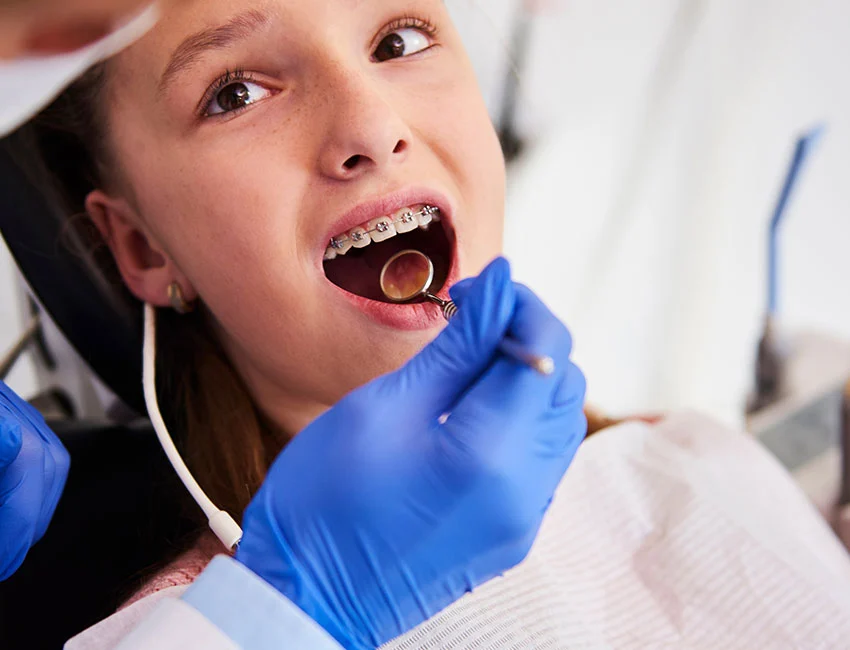
During mixed dentition, when baby and permanent teeth are both present, an orthodontist can check how much room the incoming teeth have and how the jaws are growing. This is an opportunity to address a narrow upper jaw or preserve space before neighboring teeth drift into it.
A palatal expander widens a narrow upper jaw while a child is growing. A space maintainer holds room after a baby tooth is lost early. These appliances do different jobs, so the recommendation follows an examination of the teeth and developing bite.
Dr. Zarrinnia assesses your child’s growth patterns and explains whether treatment now would help the permanent teeth come in.
What Problems Can an Early Evaluation Identify?
An early evaluation looks for problems that affect how teeth come in or how the jaws meet. Parents may notice some of these signs, while others only become apparent during an examination.
- Crowding. Incoming permanent teeth may have too little room and begin to overlap or erupt out of line. The orthodontist checks whether space can be created or preserved.
- Crossbites. Some upper teeth close inside the lower teeth. A child may shift the jaw to one side to bring the teeth together.
- Deep Overbites. Upper front teeth overlap the lower teeth too far. In some bites, the teeth can contact the gums or wear unevenly.
- Open Bites. Front teeth leave a gap when the back teeth meet. This can make biting into food difficult and may affect certain speech sounds.
- Protruding Front Teeth. Front teeth that project forward are more exposed to injury during falls or sports.
- Eruption Concerns. A permanent tooth may lack space or be coming in along an unusual path. Checking its position helps the orthodontist plan the next step.
The findings show which concerns need attention during growth and which can be monitored as more permanent teeth come in.
When Should Treatment Begin?
The timing depends on the child’s growth, available space, and the problem being treated. Most children benefit from evaluation around age 7, when the first permanent molars and incisors have erupted. Some children benefit from a first phase of treatment while baby and permanent teeth are both present. Others can wait until more permanent teeth have erupted.
Your pediatric dentist can monitor your child’s development during preventive care in Woodland Hills and refer them for an orthodontic evaluation when the appropriate timing is identified.
What Are the Long-Term Benefits?
Addressing a developing bite problem can help a child bite and chew more comfortably and give permanent teeth room to come in. Treatment of a crossbite may guide how the jaws fit together during growth. Bringing protruding front teeth into a better position can also reduce their exposure to injury.
Straighter teeth can be more accessible for brushing and flossing. Regular dental care remains important throughout orthodontic treatment to check for decay and keep the teeth and gums healthy.
Early care focuses on the problem present now. Many children still need braces or aligners later to finish aligning the permanent teeth.
Can Early Care Avoid Every Extraction?
The result depends on the cause and severity of crowding, the child’s growth, and the response to treatment. An early evaluation can identify opportunities to create or preserve space, but it cannot predict that every permanent tooth can be kept. The orthodontist explains the reasons for any extraction recommendation and how it fits the treatment plan.
Frequently Asked Questions
At what age should my child see an orthodontist?
The American Association of Orthodontists recommends that children have their first orthodontic evaluation by age 7, when the first permanent teeth typically appear. This timing allows for early detection of developing problems and optimal treatment planning.
Is early orthodontic treatment always necessary? Not every child needs early orthodontic treatment, but evaluation helps determine if intervention would be beneficial. Some children can wait until more permanent teeth erupt, while others benefit from treatment of a specific concern during growth.
Does early treatment guarantee that extractions will be avoided?
Early care may help create or preserve space, but extractions can still be appropriate. The orthodontist recommends treatment after assessing the teeth, jaw development, and available space.
Will my child need braces again later?
Many children still need braces or clear aligners after early treatment. The length and complexity of that phase depend on the remaining alignment concerns and how the permanent teeth develop.
Understand Your Child’s Treatment Needs
An early evaluation can help a family understand how a child’s smile is developing. Dr. Zarrinnia at Orthodontics in Woodland Hills specializes in preventive orthodontic care and would love to evaluate your child’s development. A consultation can clarify whether treatment or monitoring is appropriate and what each recommendation is intended to address.
If you want to learn more about early orthodontics, visit our Early Orthodontics in Woodland Hills page or schedule a consultation.